

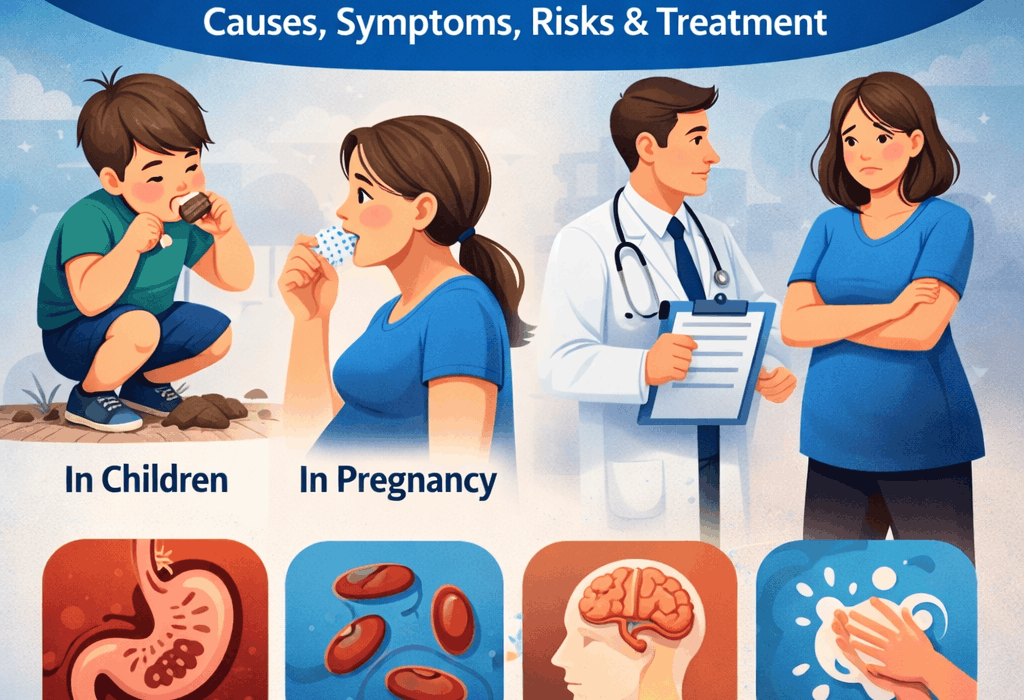
The word Pica comes from the Latin word for magpie — a bird known for consuming almost anything, edible or not. Pica disorder is a serious eating disorder characterized by persistent consumption of non-food, non-nutritive substances such as dirt, clay, chalk, soap, ash, paper, or charcoal.
While it is most commonly seen in children and individuals with developmental disabilities, it can also occur during pregnancy and in adults. Understanding pica is critical because it is often underdiagnosed and can lead to serious medical complications.
What Is Pica Disorder?
According to DSM-5 and ICD-10, pica is diagnosed when a person persistently eats non-food items for at least one month, the behavior is developmentally inappropriate, and it is not culturally accepted practice.
Common substances include dirt, clay, ice, chalk, soap, paper, hair, and metal objects.
What Causes Pica?
Possible contributing factors include iron deficiency, gastrointestinal distress, neurological conditions affecting impulse control, and obsessive-compulsive spectrum patterns.
Is Pica Dangerous?
Yes. Risks include gastrointestinal blockage, intestinal perforation, lead poisoning, infection, dental injury, and other serious medical complications.
Treatment Options
Treatment may involve medical evaluation, iron supplementation, behavioral therapy, trigger identification, reinforcement strategies, and structured psychological counseling.
When to Seek Help
Consult a healthcare professional if non-food consumption persists beyond one month, causes physical symptoms, or increases in frequency.
Conclusion
Pica disorder requires timely evaluation and structured intervention. Early professional support improves outcomes and reduces medical risks.