

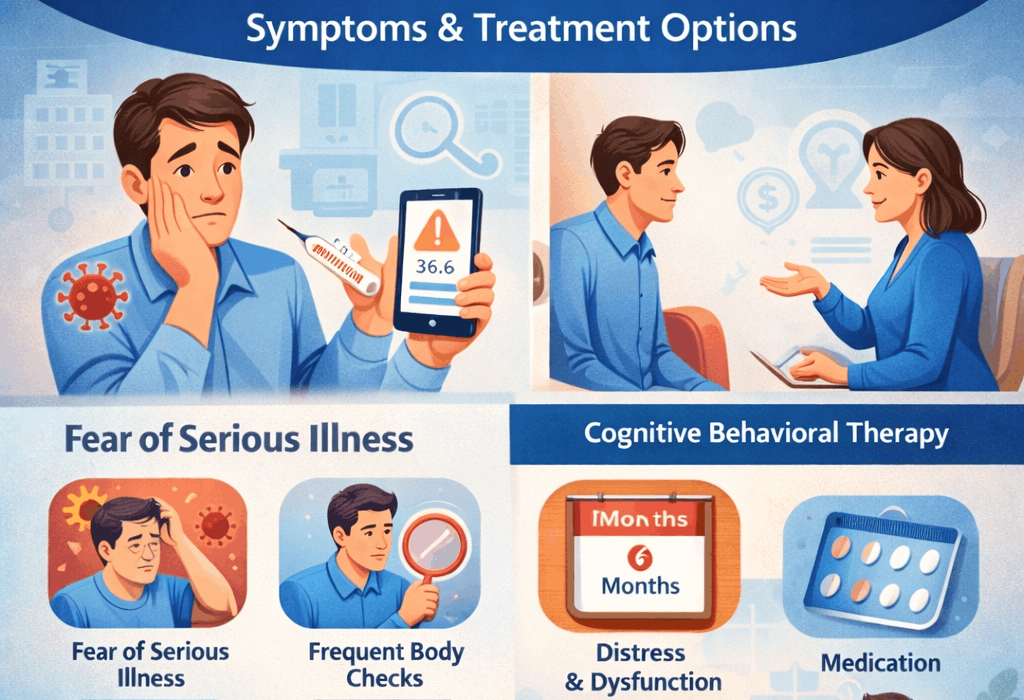
Most people worry about their health occasionally. However, for some individuals, the fear of being seriously ill becomes persistent and overwhelming — even when medical evaluations show no significant disease.
Illness Anxiety Disorder (IAD) is a mental health condition characterized by excessive fear of having or developing a serious, life‑threatening illness. This anxiety persists despite minimal or no physical symptoms and causes significant distress in daily functioning.
What Is Illness Anxiety Disorder?
According to the Diagnostic and Statistical Manual of Mental Disorders (DSM‑5), Illness Anxiety Disorder replaced the earlier term ‘Hypochondriasis’ due to the stigma associated with it.
DSM‑5 now differentiates between:
- Somatic Symptom Disorder – when significant physical symptoms are present.
- Illness Anxiety Disorder – when anxiety about illness is excessive despite mild or absent physical symptoms.
Prevalence and Risk Factors
Research suggests that clinically significant health anxiety may affect up to 13% of the adult population.
IAD can occur in youth and adults, with no significant gender difference. It may worsen over time if untreated. It is more commonly observed among individuals facing unemployment, lower educational exposure, or chronic stress.
Symptoms of Illness Anxiety Disorder
- Persistent preoccupation with having or developing a serious illness.
- Mild or absent physical symptoms, yet intense fear of disease.
- Health concerns disproportionate to actual medical findings.
- Repeated body checking for signs of illness.
- Frequent doctor visits or, conversely, complete avoidance of medical settings.
- Fear lasting at least six months (specific feared illness may change).
- Significant distress and impairment in daily functioning.
- Symptoms not better explained by another mental disorder.
How Illness Anxiety Disorder Develops
Individuals with IAD often misinterpret normal bodily sensations (e.g., fatigue, minor rashes, headaches) as signs of severe illness. For example, a harmless skin mark may be interpreted as cancer.
This pattern is driven by heightened anxiety, catastrophic thinking, and constant monitoring of bodily sensations.
Treatment for Illness Anxiety Disorder
The goal of treatment is to reduce health anxiety, improve coping skills, and restore normal functioning.
- Cognitive Behavioral Therapy (CBT): Helps identify and modify maladaptive beliefs about illness and reduce compulsive health-checking behaviors.
- Psychoeducation: Educating patients about anxiety mechanisms reduces fear and misinterpretation.
- Mindfulness-Based Cognitive Therapy: Helps patients detach from intrusive health fears.
- Acceptance and Commitment Therapy (ACT): Encourages psychological flexibility and value-driven living.
- Stress Management and Relaxation Techniques: Breathing exercises, guided imagery, meditation, and yoga reduce physiological anxiety.
- Family Therapy: Helps family members respond constructively and reduce reinforcement of health anxieties.
- Medication: In severe cases, a psychiatrist may prescribe medication to manage underlying anxiety or depressive symptoms.
When to Seek Professional Help
Professional support is recommended if:
- Health fears interfere with work or relationships.
- Medical reassurance does not reduce anxiety.
- There is persistent avoidance or excessive medical testing.
- Anxiety about illness dominates daily thoughts.
Conclusion
Illness Anxiety Disorder is not attention-seeking behavior. It is a legitimate mental health condition that can significantly affect quality of life. With appropriate psychological Illness Anxiety Disorder is not attention-seeking behavior. It is a legitimate mental health condition that can significantly affect quality of life. With appropriate psychological intervention and, when necessary, medical support, individuals can regain control and lead balanced, productive lives.