

In a world filled with increasing conveniences and increasing complications, we tend to focus more on what is wrong than on what is working.
Humans are not machines. We cannot function endlessly in a loop of achievement and expectation. We need to pause, notice, and appreciate. That is where gratitude comes in.
What Is Gratitude?
Gratitude is the genuine feeling of thankfulness and appreciation for the good in life.
Researcher Robert Emmons describes gratitude in two parts: recognizing that there is goodness in life and acknowledging that this goodness often comes from outside ourselves.
Gratitude shifts focus from entitlement to appreciation.
Why Gratitude Is Important
Even when people achieve their goals, happiness often fades due to hedonic adaptation — the tendency to get used to positive changes.
Without conscious gratitude, the mind keeps chasing the next milestone hoping to recreate joy.
As David Steindl-Rast said, ‘Happiness does not lead to gratitude. Gratitude leads to happiness.’
Scientifically Proven Benefits of Gratitude
In 2003, psychologists Robert Emmons and Michael McCullough demonstrated that regularly practicing gratitude improves well-being.
Physical Benefits:
- Strengthens immune functioning
- Reduces the experience of pain
- Lowers blood pressure
- Improves sleep quality
- Increases energy levels
Psychological Benefits:
- Improves mood
- Increases positive emotions
- Enhances optimism
- Reduces depressive symptoms
- Boosts resilience
Social Benefits:
- Strengthens relationships
- Increases compassion and forgiveness
- Reduces loneliness
- Enhances communication
Practical Tools to Practice Gratitude
- Gratitude Journaling – Write down 3–5 specific things you are grateful for regularly.
- Write Thank-You Letters – Express appreciation directly or privately.
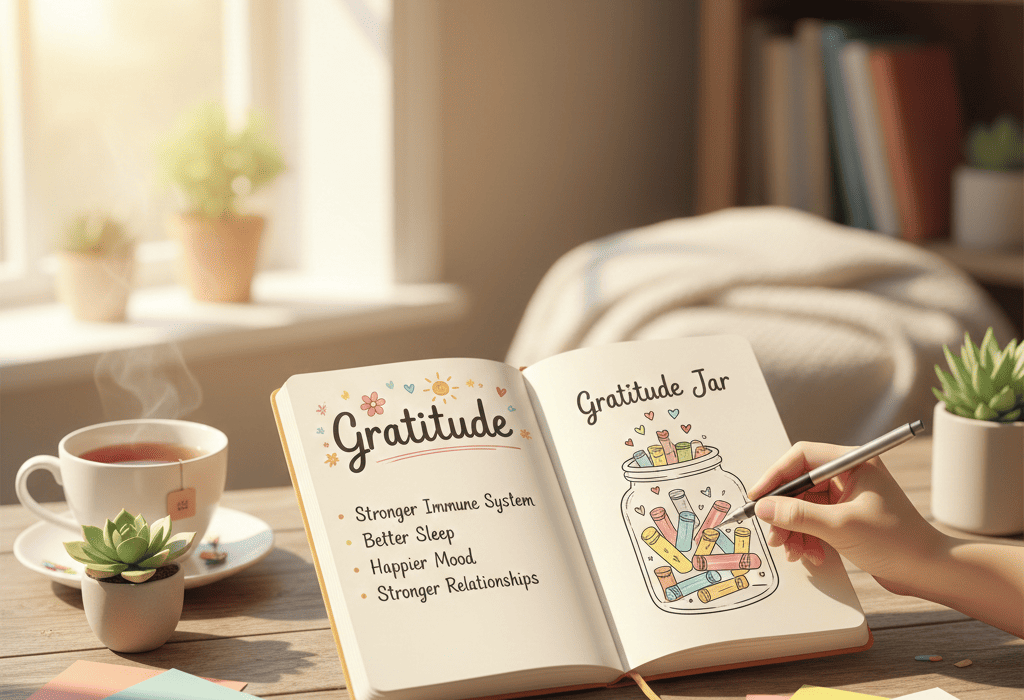
- Gratitude Jar – Record grateful moments and revisit them later.
- Prayer or Reflection – Express thankfulness spiritually if inclined.
- Savor One Experience Daily – Reflect deeply on one meaningful moment each day.
Why Gratitude Can Feel Difficult
Self-Serving Bias – We credit ourselves for success and blame external factors for failures.
Need for Control – Gratitude requires acceptance, which can feel uncomfortable.
Just-World Hypothesis – Believing the world owes us fairness can make gratitude harder initially.
Final Thoughts
Gratitude is not denial of problems. It is balance. It does not eliminate struggle, but it prevents emotional depletion.
Three minutes a day. A small notebook. A quiet pause. The habit is simple. The impact is profound.