

Saying “thank you” has become automatic. We say it out of courtesy and habit — but how often do we truly feel gratitude?
Think about your past week. How many positive things happened? And how many of those did you consciously appreciate? For most people, the numbers don’t match.
We often express gratitude only when something feels extraordinary. But everyday support systems quietly shape our lives — colleagues, family members, friends, and even our own bodies.
Is Practising Gratitude Scientifically Proven?
Research supports the psychological benefits of gratitude.
In one study, college students receiving counseling for anxiety and depression were divided into three groups:
- Group 1 wrote one gratitude letter per week for three weeks.
- Group 2 wrote about negative experiences.
- Group 3 completed no writing exercise.
Participants who wrote gratitude letters showed significantly better mental health outcomes compared to the other groups — and the positive effects lasted beyond the three-week exercise.
Even participants who did not send their letters experienced benefits, suggesting that feeling gratitude itself has measurable impact.
How Practising Gratitude Improves Mental Health
People who consistently practise gratitude tend to experience:
- Better physical health
- Improved sleep
- Reduced stress
- Greater optimism
- Stronger relationships
- Increased compassion
Gratitude interrupts negative rumination and strengthens emotional resilience.
Gratitude and Relationships
Research shows individuals who regularly express appreciation toward their partner feel more satisfied in the relationship and communicate concerns more openly.
Gratitude reduces defensiveness and increases emotional safety.
How to Practise Gratitude
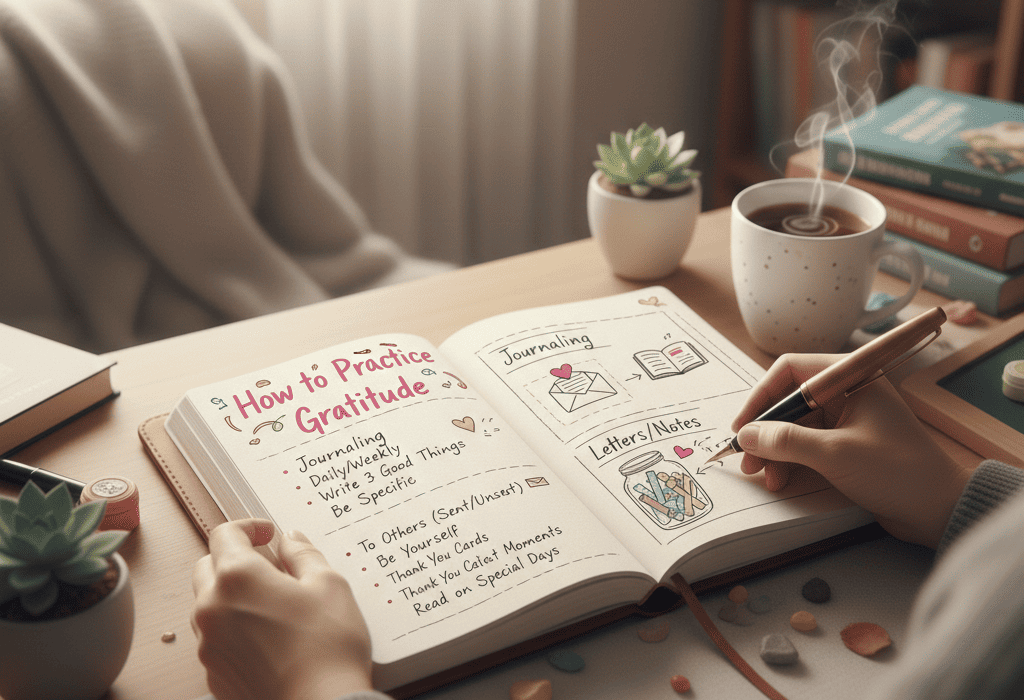
- Write a Gratitude Letter – Choose one person and write why you appreciate them.
- The ‘3 Things’ Practice – Write three things you are grateful for each day or week.
- Gratitude Journaling – Maintain a dedicated notebook or digital journal.
- Gratitude Apps – Use digital reminders and structured prompts.
- Mental Gratitude – Reflect silently during breaks if writing is not possible.
How Often Should You Practise Gratitude?
You may practise daily, weekly, or every alternate day. After a few entries, assess your mood and adjust the schedule accordingly.
Consistency matters more than frequency.
What If You Miss a Day?
Missing a session is not failure. Notice your mood and return to the practice when needed.
Gratitude is meant to support you — not become another obligation.
Final Thoughts
Gratitude is not just a polite word. It is a cognitive shift from scarcity to awareness.
Small acknowledgments, consistent practice, and quiet reflection are where its power lies.