

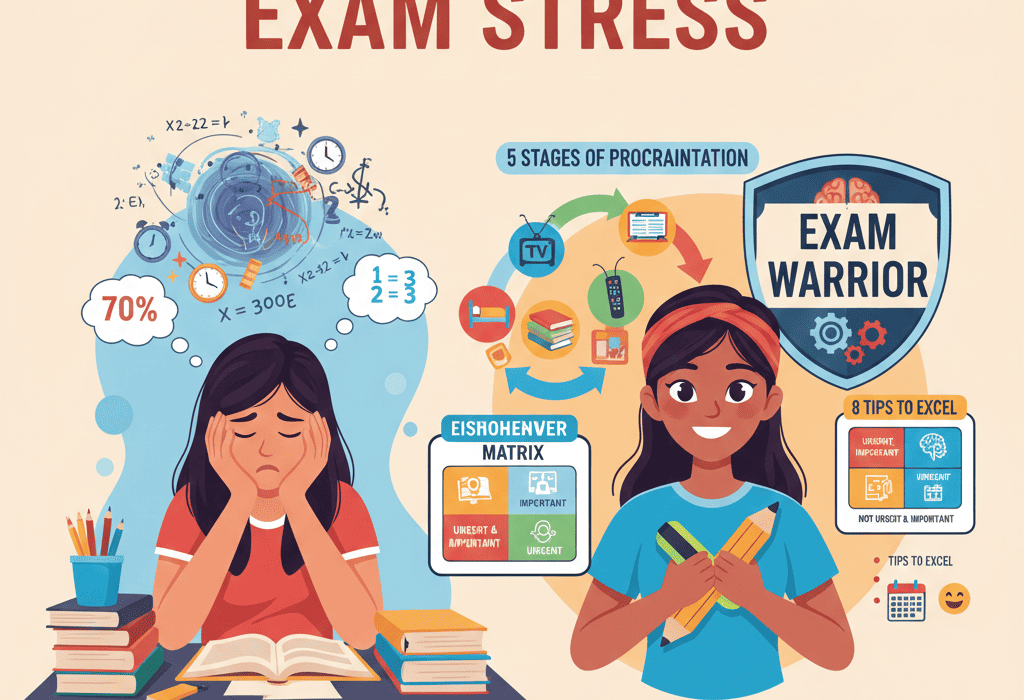
Alex has always been a bright student. Scoring well felt easy—until it didn’t.
Now in Class 11, she receives her first test result: 70%. Doubt creeps in. What if she doesn’t get into her dream college? She hasn’t even started entrance preparation. Worry turns into panic, and panic turns into procrastination.
The Reality of Exam Stress
Exam anxiety is real and serious. It affects students physically, emotionally, and cognitively. However, anyone can excel in exams by shifting from being an exam worrier to becoming an exam warrior.
The Elephant in the Room: Procrastination
Procrastination is often anxiety disguised as avoidance. The cycle usually follows: fear of not performing well, avoiding starting, temporary relief, guilt, and increased stress.
Signs of Exam Anxiety
Physical symptoms: headaches, rapid heartbeat, shortness of breath, light-headedness, panic attacks.
Emotional symptoms: fear, helplessness, irritability, disappointment.
Cognitive symptoms: difficulty concentrating, negative thinking, comparison with others.
How to Beat Exam Anxiety
- Practice cognitive therapy techniques and guided meditation.
- Use relaxation methods such as Progressive Muscle Relaxation.
- Practice deep breathing exercises.
- Seek professional support if anxiety feels overwhelming.
8 Smart Study Tips to Excel in Exams
- Prioritize mental and physical health.
- Use retrieval practice: test yourself instead of re-reading notes.
- Use spaced practice: study in 30–60 minute blocks with breaks.
- Practice successive relearning by combining retrieval and spacing.
- Avoid multitasking.
- Rest when needed.
- Study in a positive emotional state.
- Seek support early if anxiety interferes with performance.
Important Reminder
An exam is not a test of your self-worth but a test of preparation. Focus on effort rather than results. Preparation builds confidence, and confidence reduces anxiety.
Frequently Asked Questions (FAQ)
What causes exam anxiety? Fear of failure, perfectionism, high expectations, and procrastination.
Can exam anxiety affect performance? Yes, severe anxiety can impair concentration and memory retrieval.
How early should preparation begin? Ideally, start early and use spaced learning.
When should professional help be sought? If anxiety leads to panic attacks, sleeplessness, or interferes with daily functioning.