

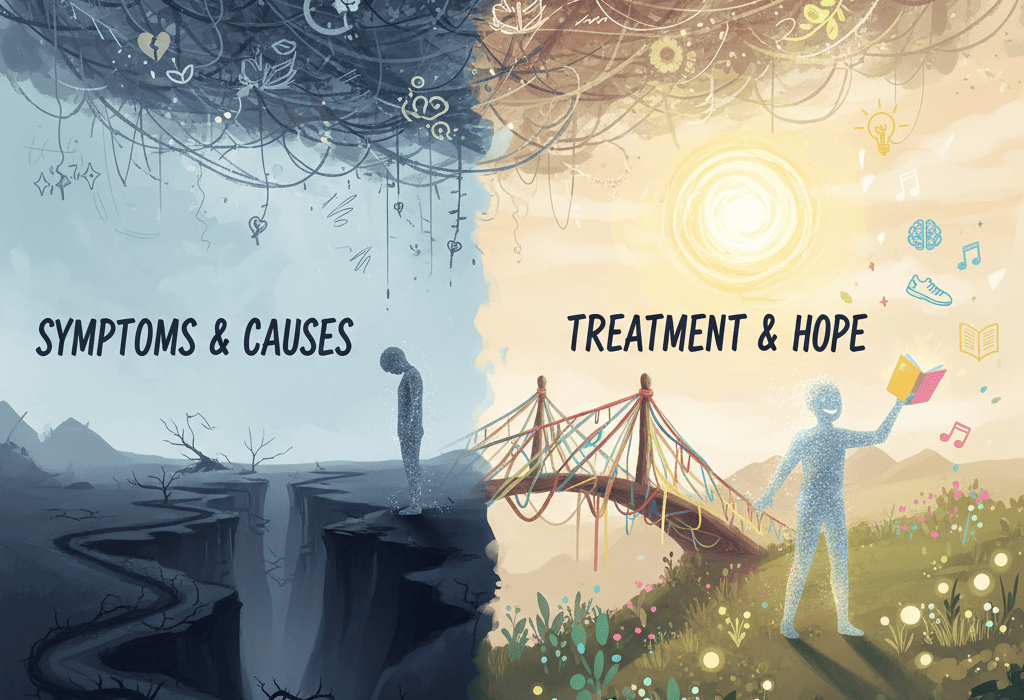
Adolescence is a highly vulnerable stage of life emotionally and psychologically. Among the various mental health challenges affecting teens today, depression is one of the most prevalent conditions.
Teen depression is not moodiness or attention-seeking behavior. It is a serious mental health condition that requires awareness and timely intervention.
What Is Depression in Teenagers?
Depression in teenagers refers to a persistent state of low mood, loss of interest, emotional distress, and functional impairment lasting two weeks or more.
It may present as Major Depressive Disorder, Dysthymia, Bipolar Depression, or other depressive conditions.
Symptoms of Depression in Teenage Girls
Emotional Symptoms: persistent sadness, irritability, hopelessness, guilt, low self-confidence, suicidal thoughts.
Physical Symptoms: sleep disturbances, fatigue, appetite changes, weight gain or loss.
Behavioral Symptoms: loss of interest, poor academic performance, social withdrawal, anger outbursts, substance abuse, self-harm behaviors.
Causes of Teenage Depression
Biological and hormonal changes during puberty.
Brain chemistry and neurotransmitter imbalance.
Genetic predisposition.
Social issues such as bullying, rejection, and comparison.
Trauma, abuse, or unresolved childhood experiences.
Romantic relationship stress and breakups.
Academic pressure and perceived failure.
Body image concerns and self-esteem issues.
Family conflict and substance use.
Treatment of Teenage Depression
Psychotherapy such as Cognitive Behavioral Therapy (CBT).
Medication under psychiatric supervision when required.
Lifestyle interventions including exercise, healthy diet, and proper sleep.
Emotional support from family and peers.
Healthy coping strategies like journaling, hobbies, and mindfulness.
When to Seek Professional Help
If a teen expresses suicidal thoughts, engages in self-harm, withdraws completely, or shows severe behavioral changes, immediate professional help is necessary.
Frequently Asked Questions (FAQ)
What are early signs of depression in teenagers? Persistent sadness, irritability, sleep changes, withdrawal, and academic decline.
Is teenage depression just a phase? No. Persistent symptoms lasting more than two weeks may indicate clinical depression.
Are teenage girls more prone to depression? Yes, due to hormonal, social, and psychological factors.
Can therapy help? Yes, evidence-based therapies significantly reduce symptoms.
What should parents do if their teen talks about suicide? Take it seriously and seek immediate professional help.