

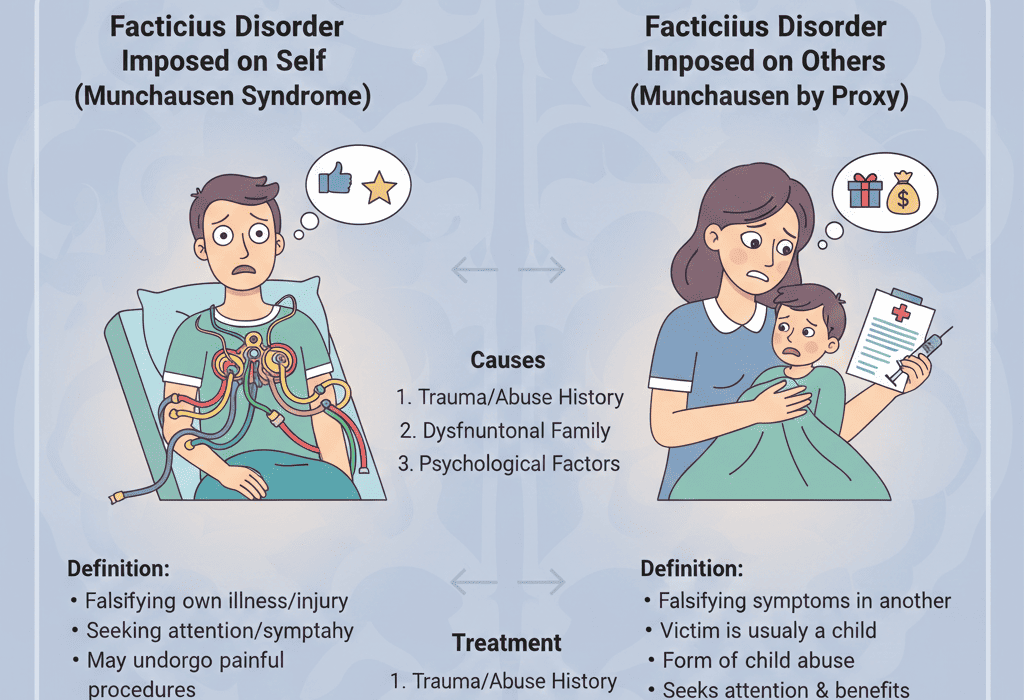
Factitious disorder is a serious mental health condition in which a person deliberately fabricates, induces, or exaggerates physical or psychological symptoms to assume the role of a patient or caregiver of someone who is ill.
What Is Factitious Disorder?
There are two types of factitious disorder:
- Factitious Disorder Imposed on Self (Munchausen Syndrome) – The individual pretends to have or induces illness in themselves.
- Factitious Disorder Imposed on Another (Munchausen by Proxy) – A caregiver fabricates or induces illness in someone under their care, usually a child. This is considered a serious form of abuse.
Causes of Factitious Disorder
Research suggests possible contributing factors include childhood trauma, dysfunctional family environments, low self-esteem, personality disorders, and professional exposure to healthcare settings.
What Do Individuals Seek?
Most individuals do not seek financial gain. They often seek attention, sympathy, emotional validation, and a sense of identity as a patient or caregiver.
Treatment Options
Treatment can be challenging. Psychotherapy is the primary treatment approach. In cases involving children, ensuring safety is the first priority, and multidisciplinary intervention may be required.
Frequently Asked Questions (FAQ)
What is factitious disorder?
A mental health condition where a person intentionally fakes or induces illness for psychological reasons.
What is Munchausen syndrome?
An older term for factitious disorder imposed on self.
What is Munchausen by proxy?
Factitious disorder imposed on another, where a caregiver fabricates illness in someone under their care.
Is factitious disorder the same as malingering?
No. Factitious disorder involves internal psychological motives, while malingering involves external benefits such as money or legal advantage.
What are warning signs of Munchausen by proxy?
Inconsistent medical findings, doctor shopping, symptoms appearing only in caregiver’s presence, and unnecessary medical procedures.
Can factitious disorder be treated?
Yes, with psychotherapy and proper intervention, though treatment can be difficult due to denial.