

Peaceful sleep is something most of us take for granted — until it disappears.
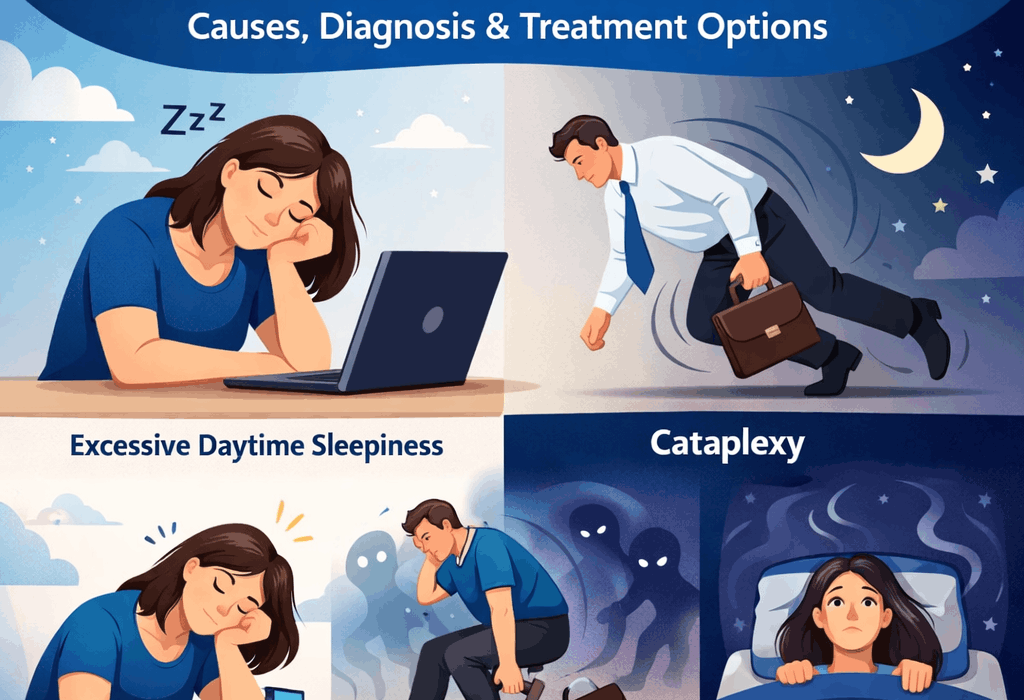
Jyoti began experiencing uncontrollable daytime sleepiness. She would suddenly drift off during conversations. Sometimes she woke up unable to move her body, fully conscious but paralyzed. At night, as she tried to sleep, she felt like she was falling into a spiral. Her work suffered. Her relationships became strained. She felt frightened and confused.
These are classic narcolepsy symptoms, a neurological sleep disorder that is often misunderstood and frequently misdiagnosed.
What Is Narcolepsy?
Narcolepsy is a chronic neurological sleep disorder that affects the brain’s ability to regulate sleep–wake cycles.
The term was coined in 1880 by French physician Jean-Baptiste-Édouard Gélineau. It comes from the Greek words narkosis (numbness) and lepsis (seizure or attack).
It commonly begins between ages 15–25, though it can appear later. Prevalence is approximately 1 in 2,000–3,000 individuals globally.
Narcolepsy is not laziness. It is not poor sleep hygiene. It is a medical condition.
Core Narcolepsy Symptoms (The Classical Tetrad)
- Excessive Daytime Sleepiness (Sleep Attacks): Overwhelming urges to sleep during the day, even after adequate nighttime rest. These attacks can occur during meetings, while eating, mid-conversation, or even while driving.
- Cataplexy: Sudden loss of muscle tone triggered by strong emotions such as laughter or surprise. Consciousness remains intact.
- Hypnagogic or Hypnopompic Hallucinations: Vivid, dream-like experiences that feel intensely real, occurring while falling asleep or upon waking.
- Sleep Paralysis: Temporary inability to move or speak while falling asleep or waking up, despite being fully conscious.
What Causes Narcolepsy?
Narcolepsy is linked to dysfunction in hypocretin (orexin), a neurotransmitter that regulates wakefulness.
Contributing factors may include autoimmune mechanisms, genetic predisposition, rare brain injury, or viral triggers.
Diagnosis is made through clinical evaluation, polysomnography (sleep study), and the Multiple Sleep Latency Test (MSLT).
Narcolepsy Treatment Options
- Medication prescribed by a neurologist or sleep specialist.
- Scheduled naps to reduce sudden sleep attacks.
- Cognitive Behavioral Therapy (CBT) to manage emotional impact.
- Imagery Rehearsal Therapy for distressing hallucinations.
- Relaxation techniques such as Progressive Muscle Relaxation and guided meditation.
- Lifestyle and nutrition planning to support symptom control.
When to Seek Professional Help
Consult a specialist if you experience persistent excessive daytime sleepiness, sudden muscle weakness triggered by emotion, frequent sleep paralysis, or vivid hallucinations at sleep onset or awakening.
Living With Narcolepsy
Narcolepsy is manageable. With medical care, psychological support, and structured routines, individuals can live full, productive lives.
Frequently Asked Questions (FAQ)
Is narcolepsy a mental illness? No. It is a neurological sleep disorder.
Can narcolepsy go away on its own? No. It is typically lifelong but manageable.
Is sleep paralysis always narcolepsy? No. Occasional sleep paralysis is common.
Can therapy help narcolepsy? Therapy helps manage emotional and adjustment difficulties.